What the research shows, what I actually think, and what made it into Smart Meetings.
Earlier this week, Smart Meetings published
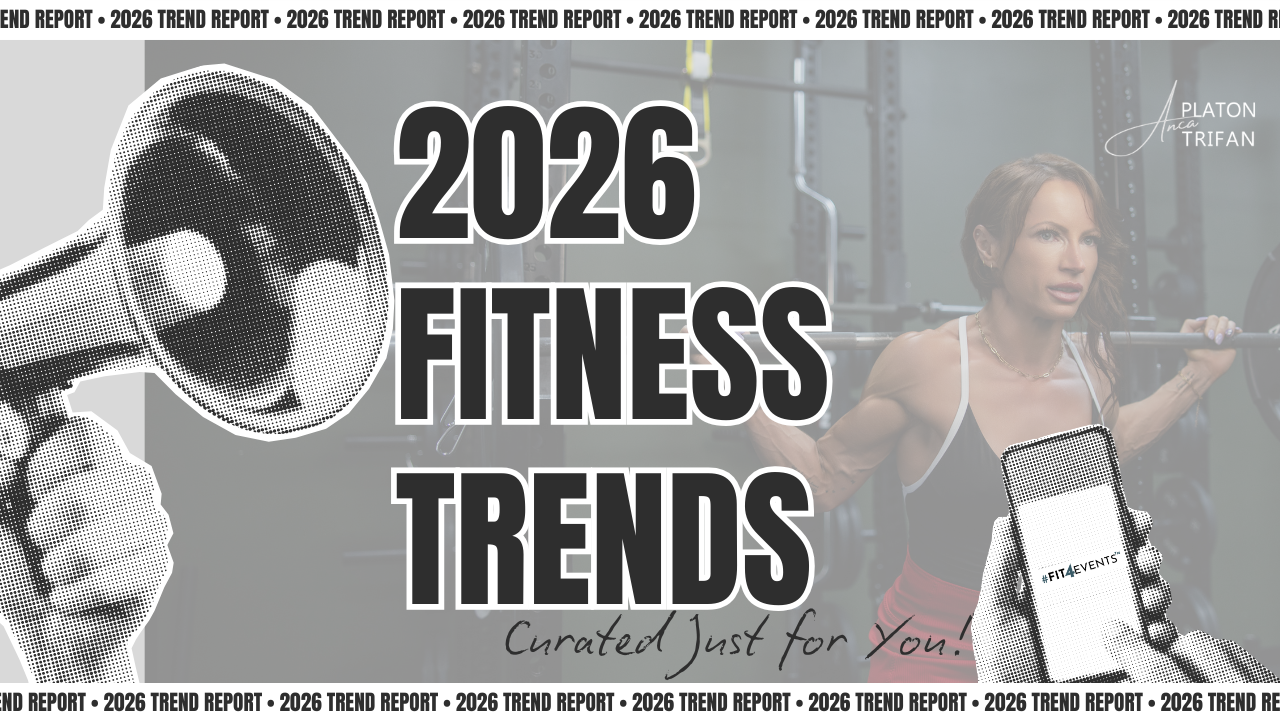
"Exercise, Tech and Wellness Join Forces for Your Individual Health Journey," a round-up of expert perspectives on the 2026 fitness landscape. I was invited to contribute, grounded in the ACSM 2026 Worldwide Fitness Trends report and the Global Wellness framing I’ve been applying to events: my #fit4events framework, as well as neuro-wellness, the over-optimization backlash, hardcare meeting softcare, and the rise of social, ritual-based movement.
Two of my answers were quoted in the article, one on aging and muscle, one on language and programming. But the full Q&A is 32 questions deep, and the complete picture is worth having. Below is everything I submitted, organized by theme, with notes where my thinking made it into print. This is not a wellness pep talk. It is a systems analysis of where the fitness industry is going and what it means for people who design high-performance work environments.
If you plan meetings, lead teams, or manage people through sustained pressure, this is for you.
Big-Picture and Trend Context
Q1: The ACSM survey marks its 20th year in 2026. What does this year’s list say about how the fitness industry has fundamentally changed?
Twenty years ago, fitness sold effort. Now it sells readiness. The industry used to be obsessed with what you do inside a gym. The 2026 list is obsessed with what you can sustain outside it. Wearables at number one, older adult programs at number two, weight management at number three, mental health climbing, functional training holding. That is the industry admitting something people feel in their bones: training only matters if it carries real life.
My lens is bodybuilding and high-pressure work. I have watched brilliant people train hard and still get stuck because the system around the training is sloppy. Friction wins. Sleep gets sacrificed. Meals become guesswork. Stress stays high. Recovery becomes an afterthought. Then results stall and people blame age, hormones, genetics, motivation. The industry is finally moving toward what I have been saying for years: results come from systems that reduce friction, protect recovery, and make adherence easier than self-sabotage.
Q2: Several top trends point to integration of technology, healthcare, and wellness. Is this the most “connected” the fitness industry has ever been?
Connected on paper, yes. Connected in practice, uneven. The tech is talking to the apps, the apps are talking to the wearables, and the wearables are starting to talk to healthcare. That is hardcare getting real power. At the same time, people are also done with living like a science project. That is the softcare correction the Global Wellness conversation keeps surfacing. Both are happening at once.
I see the same tension in my world. Event pros want tools that reduce chaos, and then they drown themselves in dashboards, notifications, and constant inputs. Connection only helps when it collapses complexity into a cleaner decision. If the connection adds noise, it becomes another form of depletion with a nicer interface.
Q3: How do you distinguish a true fitness trend from a short-lived fad?
A trend lowers failure rates. A fad increases them. If something helps more people stay consistent for months, across travel, stress, and imperfect weeks, it has legs. If it needs perfect conditions, perfect motivation, and perfect content lighting, it dies the minute life gets real.
My personal filter: does it reduce friction or add friction? Protein anchors, strength training, sleep hygiene, recovery systems, and basic tracking reduce friction. Most viral hacks add friction, because they pile on rules and turn people into anxious accountants. Social media sells intensity because intensity looks impressive. Biology rewards repeatable work and stable inputs.
Wearables, Data, and Technology
Q4: Wearable technology returned to the No. 1 spot in 2026. Why do wearables continue to dominate?
Because people want proof that their effort is doing something. Wearables give that feedback loop. They also give a sense of control when life feels chaotic. For a lot of people, the data is less about accuracy and more about reassurance.
Here is my blunt take. Wearables are useful when they teach pattern recognition. They are harmful when they turn into a mood ring. If you wake up and let a readiness score decide who you are today, you are handing your nervous system a new boss. I use data to validate trends I already feel: sleep quality, resting heart rate drift, HRV dips during high stress, recovery during heavy training blocks. The value is in the pattern, not the number.
Q5: How are fitness professionals using wearable and biometric data differently today than five years ago?
The best ones use it to manage recovery and decision fatigue, not to gamify output. Five years ago, it was steps, calories, and “close your rings.” Now it is more about sleep trends, training readiness, and adjusting load so people keep showing up.
This is where my world overlaps perfectly with fitness trends. Event season is an endurance sport with bad sleep and bad food around every corner. Wearable data can help someone see the invisible cost of late-night eating, alcohol, constant caffeine, and chronic stress. A good coach turns that into a simple move: earlier cutoff, protein anchors, hydration, fewer decisions, more recovery.
Q6: What’s the biggest benefit and the biggest risk of relying on data-driven fitness tools?
The biggest benefit is awareness. The biggest risk is outsourcing self-trust. Data can show you that your “fine” is actually depleted. It can also show you that your “I’m failing” story is drama and your baseline is improving.
The risk is obsession and misinterpretation. People can become hyper-focused on glucose swings, sleep scores, and recovery metrics and start making their lives smaller to keep numbers pretty. My position is practical: use the data to reduce the biggest mistakes. Stop guessing your intake. Stop pretending sleep is optional. Stop training hard while recovering poorly. Data can highlight the friction you are missing. Then you simplify.
Q7: Do you see a future where wearable data is routinely shared with healthcare providers?
Yes, especially for cardiometabolic health, rehab, and aging populations. The plumbing already exists. The friction is trust, privacy, and clinical usefulness. A consumer wearable is not the same as a clinical device, and most healthcare systems are not set up to interpret a flood of lifestyle data without creating more liability than value.
I think the first widespread version looks like this: structured programs where a clinician sets guardrails, a coach runs execution, and wearable trends support adherence and safety. That model works, because it gives the data a place to land.
Aging, Longevity, and Demographics
Q8: Fitness programs for older adults ranked No. 2 again this year. What does that say about where demand is coming from?
It says the strongest growth market is function, not aesthetics. People are waking up to the fact that aging is trainable. Strength is trainable. Bone density responds to load. Muscle is metabolic insurance. When you preserve lean mass, everything improves: stability, blood sugar control, energy, confidence, independence. I also think the demand is coming from women who are done being told midlife is decline. They are realizing that the real crisis is not aging, it is under-muscling. I have my own receipts on this, and I talk about them openly because women need proof that strength after 40 is not a fairy tale.
| As quoted in Smart Meetings |
“People are waking up to the fact that aging is trainable. Strength is trainable. The demand is coming from women who are done being told midlife is decline. They are realizing that the real crisis is not aging, it is under-muscling. Women need proof that strength after 40 is not a fairy tale.” — Quoted in Smart Meetings article “Exercise, Tech and Wellness Join Forces for Your Individual Health Journey” |
Q9: How should the industry rethink language and programming to avoid stigmatizing older adults?
Stop selling fragility. Sell capability. Language matters. “Senior fitness” sounds like a box you get put into. “Strength, balance, and mobility” sounds like a standard every adult deserves. Programming should lead with resistance training, stability, gait and balance work, and joint-friendly conditioning. It should also respect dignity. Most older adults do not want to be handled. They want to be coached.
Q10: Are facilities adapting fast enough to serve an aging but still active population?
Some are. Most are late. Many gyms still design the experience for confident lifters and high-intensity regulars, then act surprised when beginners and older adults do not stick. The adaptation is not only equipment. It is onboarding, coaching quality, lighting, sound, spacing, scheduling, and the emotional experience of walking into the room. Longevity is not a poster. It is an operating system.
Mental Health and Whole-Person Wellness
Q11: Exercise for mental health continues to climb in the rankings. Why is this trend gaining momentum now?
Because people are stressed, overstimulated, and running on depleted nervous systems. Modern life keeps people in fight-or-flight. Exercise is one of the most reliable ways to complete the stress cycle. That is not fluffy wellness speak. That is physiology. Move the body, discharge the load, regain access to calm and clear thinking.
This is also the beating heart of
#fit4events™.
Event professionals do not fall apart from lack of talent. They fall apart from depletion. Training becomes a regulation tool, a resilience tool, and a leadership tool when pressure is constant.
Q12: Has the industry communicated the mental health benefits of exercise well?
Underused, and often undermined by the marketing. The industry still sells shame and aesthetic panic, then sprinkles in “mental health benefits” like parsley. The real message should be energy, stability, sleep quality, mood, and sharper decision-making. That is what people want. That is what keeps adherence alive.
Q13: What types of exercise have the strongest evidence for improving mental health outcomes?
Strength training belongs higher in the conversation than it usually gets. It builds self-efficacy, it is measurable, it teaches progress through reps, and it changes posture and confidence fast. Steady-state cardio helps with anxiety for many people, especially when it supports recovery rather than punishes the body. Mind-body formats help downshift the nervous system and rebuild interoception, which matters in an era of constant disconnection from the body. The biggest factor is consistency. The best modality is the one someone can repeat through real life.
Q14: How should fitness professionals stay within scope while supporting clients’ mental well-being?
They support regulation and structure, and they refer when clinical care is needed. A coach can talk about sleep, stress, training load, recovery, routine, and environment. A coach can create psychological safety in the training space. A coach can help someone build a minimum standard for hard days. A coach does not diagnose, treat, or play therapist. Clear boundaries, strong referrals, and better education solve most of this.
Weight Management and Chronic Disease
Q15: The trend name shifted from “weight loss” to “weight management.” Why does that matter?
Because it stops pretending there is a finish line. Weight loss language created a culture of extremes. Weight management forces a longer view: preserving muscle, stabilizing blood sugar, protecting metabolism, and building habits that survive travel, stress, menopause, and real schedules.
This is where my “friction” lens matters. People underestimate intake, portions creep, calories hide, decision fatigue piles up. The fix is not more punishment. The fix is more structure. Protein anchors and predictable meals remove unknowns. Simple tools reduce guesswork, not because they are magic, but because they reduce decisions.
Q16: With the rise of GLP-1 medications, what role does exercise play that medication alone cannot replace?
Muscle preservation. Bone protection. Functional capacity. Identity-level discipline. GLP-1s can reduce appetite and help create a deficit. They do not replace the signal that tells the body to keep muscle. That signal is progressive resistance training. Without it, people risk becoming smaller and softer, with lower capacity and a more fragile metabolism long-term.
Medication can change appetite. It does not automatically build the lifestyle system that keeps someone stable when stress hits. Training builds the system.
Q17: Exercise for chronic disease management entered the top 20. Is fitness and healthcare finally converging?
Yes, and it is overdue. But it demands higher standards. When fitness starts touching chronic conditions, menopause, metabolic disease, and rehab, the era of unqualified internet coaching needs to end. Credentialing and scope matter.
Q18: What qualifications should consumers look for when working with fitness pros on medical goals?
Credentials that actually match the problem, plus experience, plus humility. The best sign is a professional who screens properly, communicates clearly, stays in scope, collaborates with healthcare providers, and avoids miracle promises. A fancy social following is not a credential.
Programming and Participation Shifts
Q19: Group fitness and commercial gyms both re-entered the top 20. What does that tell us about post-pandemic behavior?
People want structure and community again. Home training can work, but it collapses when the environment is chaotic. Gyms provide cues, equipment, and accountability. Group classes add belonging. The Global Wellness world has been pointing toward social wellness and collective experiences, and fitness is following that same current.
Q20: Why are adult recreation and sport clubs gaining popularity now?
Because play is adherence in disguise. Pickleball, run and swim clubs, weight lifting, sports leagues, they give people a reason to show up that is bigger than calorie math. It becomes identity and community. That is sticky. That lasts.
Q21: How important is the social component compared to physical outcomes for long-term adherence?
For most people, it is decisive. Physical outcomes plateau. Community compounds. People stay for the relationships, the ritual, the feeling of being expected. This is why wellness is getting “festivalized.” Humans want shared energy and shared meaning, not only personal optimization.
Q22: Are we seeing a shift away from performance-driven fitness toward enjoyment and sustainability?
Yes, and it is a correction, not a decline. The market is splitting. A smaller group will keep chasing performance and optimization. A much larger group is chasing energy, calm, and consistency. Enjoyment matters because enjoyment keeps people coming back long enough for biology to respond.
Recovery, Mobility, and Balance
Q23: Balance, flow, and core-focused programs ranked top five. Why do these modalities resonate across generations?
Because everyone is stiff, stressed, and sitting. Older adults need balance and core for fall prevention and independence. Younger adults need mobility and nervous system downshifting because their lives run hot all day. Athletes need movement quality so strength training does not turn into compensation patterns and injuries.
Q24: Hot and cold therapies keep rising. What does the science say?
They can help, and they can be oversold. Heat can support relaxation and cardiovascular conditioning effects. Cold can reduce soreness perception and help some people feel sharper. Neither replaces sleep, nutrition, and intelligent programming. People also misuse cold exposure around strength training when their goal is hypertrophy. Timing matters. Context matters. Recovery tools belong after the fundamentals are locked. Otherwise it becomes expensive avoidance.
Q25: Is recovery becoming as important as training in how people evaluate fitness experiences?
It needs to be, because recovery determines adaptation. People are finally connecting the dots: poor sleep wrecks training output, hunger control, mood, and decision-making. Chronic stress changes the body. Alcohol changes everything. Recovery used to be treated like a luxury. It is infrastructure.
Professional Standards and Workforce
Q26: Why does credentialing matter more now?
Because the client population got more complex and misinformation got louder. You have older adults, chronic disease management, people on GLP-1s, people training for mental health. The stakes are higher. Competence is not optional. Credentials are not a guarantee, but they raise the floor and clarify scope.
Q27: How has misinformation on social media affected public trust in fitness advice?
It created confusion and emotional whiplash. People bounce from hack to hack, then blame themselves when nothing sticks. Social media rewards certainty and novelty. Real coaching is quieter. It is boring on purpose. It builds results with repeatable inputs. The upside is that more people are starting to crave substance again. They want someone who can simplify, not someone who can perform.
Q28: What gaps still exist between industry expectations and the qualifications delivering fitness services?
Behavior change and systems design. Plenty of people can demonstrate exercises. Fewer can build a plan that survives travel, stress, menopause, kids, deadlines, and human inconsistency. The next generation of professionals who win will be the ones who reduce friction, build minimum standards, and protect recovery like it is part of the program.
Global and Future Outlook
Q29: What similarities stand out across countries, and where are the meaningful differences?
The similarities are longevity, strength, and function. The differences are access and culture. Technology-heavy trends rise faster where devices and subscriptions are affordable. In other regions, the trend leans toward coaching, community, and lower-tech formats. The human need is the same. The delivery adapts to constraints.
Q30: Which 2026 trends stay relevant five years from now?
Wearables and data translation, active aging, strength training, mental health framing, functional training, and recovery literacy. Those are not seasonal. They solve permanent problems.
Q31: One trend not yet in the top 20 that you believe will appear soon?
Nervous system-first programming as a formal category, plus AI-guided personalization that actually reduces friction. AI will show up when it stops acting like a content machine and starts acting like a coach’s assistant: turning sleep and recovery trends into simple training adjustments, tightening nutrition adherence through fewer decisions, and helping people maintain a baseline standard while traveling and stressed. The winning version feels quieter and more human, not more automated.
Q32: If you could give one piece of advice to organizations designing wellness-focused programs in 2026, what would it be?
Build systems, not interventions. Organizations design programs that work brilliantly under perfect conditions, when someone has time, motivation, stable environment, and no competing pressures. Then life happens. Travel ramps up. Stress hits. Schedules shift. And the program unravels. That is not a motivation problem. That is a systems problem.
The 2026 trends data points toward this clearly. Wearable technology succeeds because it creates systems, continuous monitoring, automatic feedback loops, persistent tracking that survives environmental change. Fitness programs for older adults work when they build systems of accountability, community, and progressive programming. Exercise for mental health requires systematic integration into daily life, not occasional wellness workshops.
The organizations winning in 2026 design for: minimum viable standards (what is the worst-day version that still counts?), environmental resilience (the program should work at home, on the road, and under pressure), behavioral automation (remove decision fatigue through pre-planning and default routines), accountability infrastructure (social accountability, progress tracking, intervention triggers), and recovery as training (non-negotiable system components, not optional add-ons).
Our direct contact,
David T Stevens, that attended The Global Wellness Summit, reported on the over-optimization backlash trend warns against endless measurement and perfectionistic wellness. The solution is not no structure. It is right structure. Systems that support human sustainability rather than demanding superhuman consistency. Design for humans who are exhausted, distracted, and inconsistent, because that is what humans are.
Where to Find More
The Smart Meetings article is live at smartmeetings.com. Anca Platon Trifan, CMP, is the CEO of Tree-Fan Events LLC and the creator of #fit4events™, a performance framework for event professionals. She writes and speaks at the intersection of technology, fitness, performance, strength, longevity, and high-stakes work.
#fit4events™
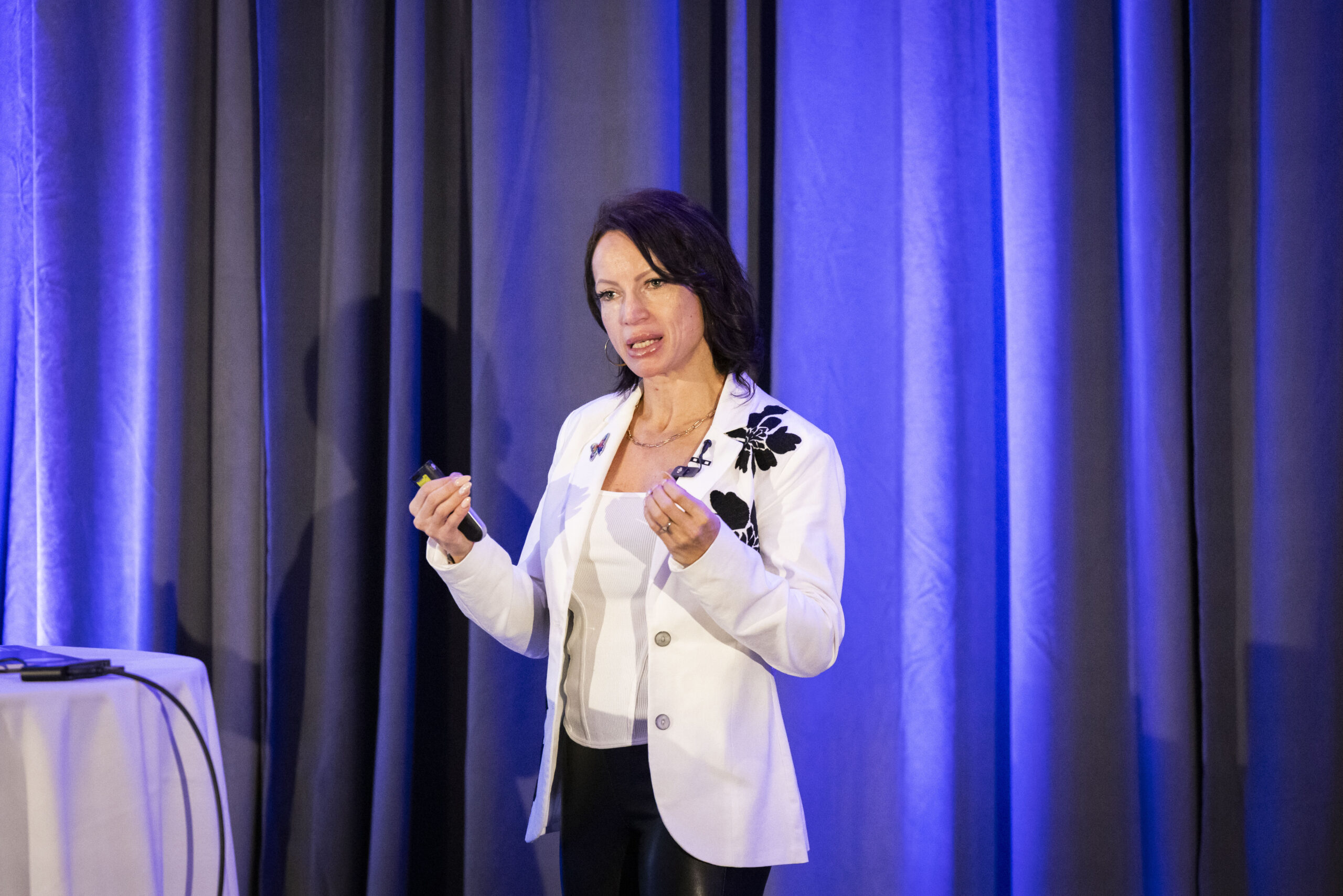
Credit: Special Events (digital) Photo